The follow-up to the pipeline article: a five-tab dashboard that audits a self-hosted Pelican analytics system. Covers the Overview, Audience, Content, Engagement, and Health tabs, the card types each contains, the five-check verify tool as a correctness contract, and the deliberate omissions...... Read More

All tags » pelican
1-9 / 9 articles
A complete self-hosted analytics pipeline for a Pelican static site: a PHP tracker with bot detection, a SQLite view that hides pollution, a retroactive backfill tool, and a deterministic two-feed sync that keeps counts in markdown frontmatter. No third-party provider, no client-side telemetry,...... Read More
A deep‑dive into building a reproducible, animated Matrix‑style digital rain effect in pure SVG. Covers the architecture, implementation, configuration, and integration with a modular banner generator for Pelican static sites.... Read More
A deep dive into a Python tool that combines, purges, minifies, and redeploys CSS bundles for Pelican themes using a recipe-based pipeline. Learn how it records every build step, automatically replays the entire chain, and drops the result into the output folder – no full site rebuild required.... Read More
Learn how to structure your Pelican content directory, define a rich metadata vocabulary, and treat Markdown files as queryable data records. This foundation enables all future dynamic‑like features without plugins.... Read More
A deep dive into designing a banner generation system that treats visual assets as part of the build pipeline – with themes, components, and deterministic output.... Read More
A structured, production-style setup of Pelican focusing on clean architecture, isolated environments, modular configuration, and plugin discipline.... Read More
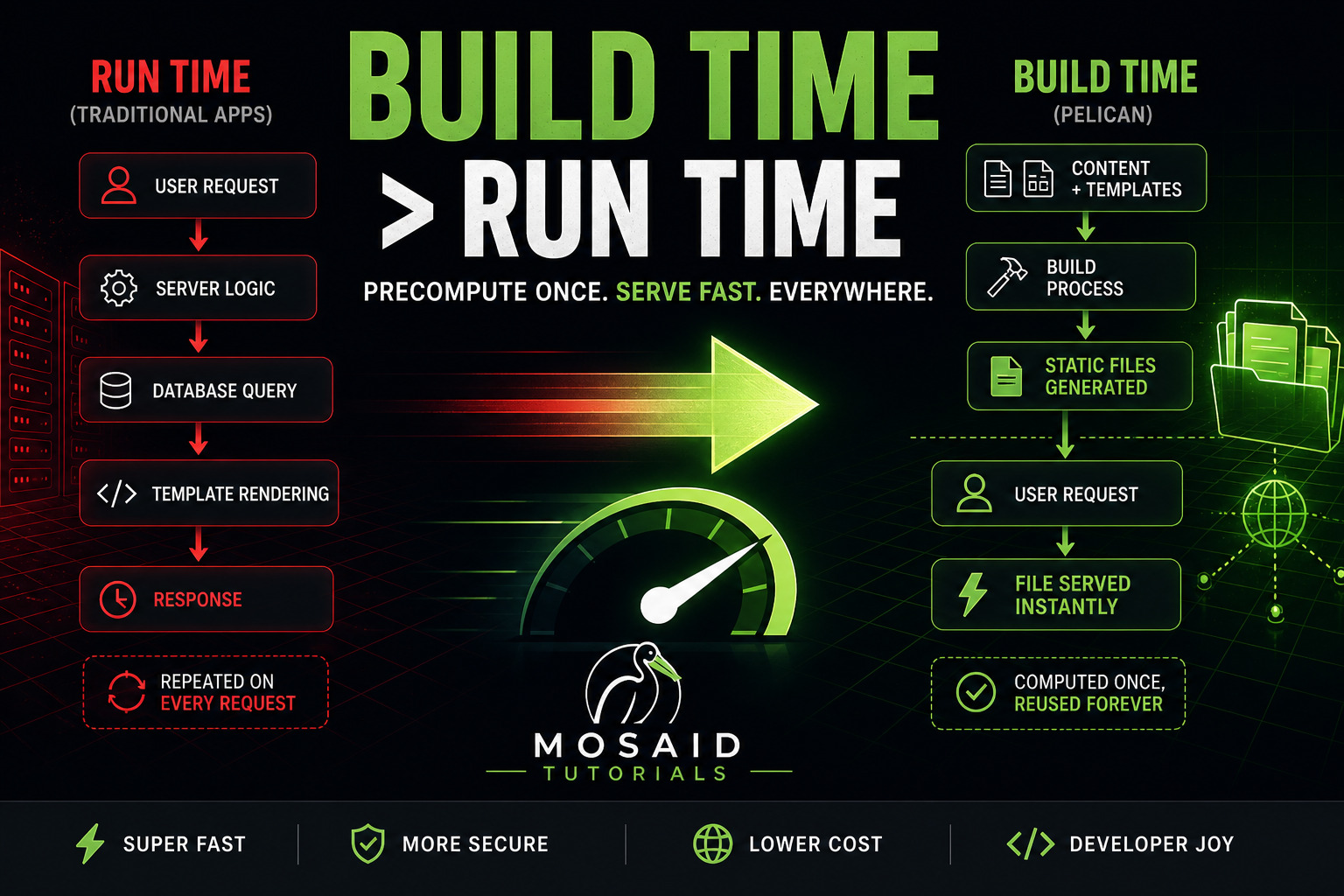
Most developers treat static sites like simplified dynamic apps. That’s a mistake. In this guide, we explore the mental model shift from runtime thinking to build-time precomputation, turning your Pelican site into a fast, data-driven system.... Read More
Static websites aren’t outdated—they’re a deliberate engineering choice. In this article, we break down why static sites still outperform modern frameworks in speed, security, and cost, and set the foundation for building dynamic-feeling websites without backend complexity.... Read More